
Is GSP coming back?
What GSP is
The Generalized System of Preferences is a trade preference program that grants duty-free entry to about 4,800 products from ~120 designated developing countries. It was authorized by the Trade Act of 1974 (19 USC 2461) and has operated under periodic renewal ever since. Major beneficiary countries historically include Thailand, Indonesia, India, Brazil, and the Philippines.
Duty-free GSP savings on imports eligible for the program were significant — on $20B+ in annual GSP imports, savings ran in the billions of dollars per year.
Why it expired
GSP's authorization expired December 31, 2020 and has since been blocked by two disputes:
- India graduation — India was removed from GSP in 2019, and the subsequent legislative fight has tied up renewal
- Eligibility criteria debate — Congress has debated adding worker-rights, environmental, and digital-trade conditions to GSP eligibility
Multiple renewal bills have been introduced without enactment. The expiration affects ~3,500 US importers who previously used GSP.
The "file anyway" preservation strategy
During GSP lapses, CBP guidance (CSMS #45151029 and subsequent) instructs importers to continue filing entries with the GSP Special Program Indicator "A" or "A+" even though duty is owed at entry. This preserves the refund right if GSP is reauthorized retroactively.
If you have been filing with "A" during the lapse:
- CBP collects duty at the MFN rate
- Your 7501 records the attempted GSP claim
- If Congress reauthorizes retroactively (as in past renewals), CBP automatically refunds the duty
If you have not been marking GSP on entries, you likely cannot retroactively claim once renewal happens. Check with your broker and correct going-forward entries immediately.
Historical renewal pattern
Past GSP lapses have routinely been reauthorized retroactively:
- Lapsed July 31, 2013 — reauthorized June 2015, refunded retroactive to lapse
- Lapsed December 31, 2017 — reauthorized March 2018, refunded retroactive
- Lapsed December 31, 2020 — has not been reauthorized as of April 2026
The current lapse is the longest in the program's history. While past pattern suggests eventual retroactive refund, the political environment for trade preferences is different in 2026.
Pending legislation as of April 2026
- S. 1867 (Wyden-Crapo) — Generalized System of Preferences Reform Act; renewal through 2029 with worker-rights conditions
- H.R. 3435 — House companion with similar framework
Both bills include retroactive refund provisions for duties paid during the lapse.
Status: both bills are in committee; no markup scheduled. Trade Subcommittee of House Ways and Means has held hearings but no vote. With the 2026 election cycle active, renewal timing is uncertain.
Other trade preference programs
GSP is not the only preference program:
- USMCA — Tariff-free access for qualifying goods from Canada and Mexico; still active
- AGOA (African Growth and Opportunity Act) — Duty-free access for sub-Saharan African countries; authorized through September 2025 with renewal pending
- CBI (Caribbean Basin Initiative) — Still active for eligible countries
- Jordan FTA, Israel FTA, etc. — Bilateral FTAs not affected by GSP status
If your sourcing can shift to a USMCA or AGOA origin, you achieve duty-free status without waiting for GSP renewal.
How GSP would interact with CAPE IEEPA refunds
CAPE processes IEEPA duty only. If you imported from a GSP-eligible country during the IEEPA window:
- IEEPA duty refundable through CAPE
- Residual MFN duty potentially refundable if GSP is retroactively reauthorized
- Two refund streams, processed separately
On a $100,000 Thailand-origin entry with $10,000 IEEPA duty and $3,000 MFN:
- CAPE refunds $10,000 (IEEPA)
- GSP retroactive refund (if enacted) refunds $3,000 (MFN)
- Plus interest on both per 19 USC 1505
What to do today
- Continue marking GSP "A" on all eligible entries — CBP guidance preserves the refund right
- Pull a GSP exposure report from ACE — total duty paid on GSP-eligible HTS during the lapse
- Model two scenarios — renewal in 2026 (best case) vs no renewal (plan for MFN duty as permanent)
- Track S. 1867 and H.R. 3435 — watch committee markup schedule
See the GSP guide for detailed filing mechanics during the lapse.
Calculate your tariff refund → /calculators/ieepa-refund
Related questions
Are IEEPA and GSP refunds separate? Yes, two different programs, different authorities.
Can I recover MFN duty while GSP is lapsed? Only if GSP is retroactively reauthorized.
What if I didn't mark GSP on my entries? Retroactive claims are limited. Consult your broker.
Not legal advice. Customs business performed by licensed customs broker partners under 19 CFR 111.
Keep reading

Section 301 China duties under the SCOTUS ruling
Why Section 301 was not refunded along with IEEPA.
Read more →
Section 232 steel duty exclusion mechanics
Independent authority that survives the IEEPA ruling.
Read more →
IEEPA refund guide for non-GSP entries
How the GSP gap affects IEEPA refund math.
Read more →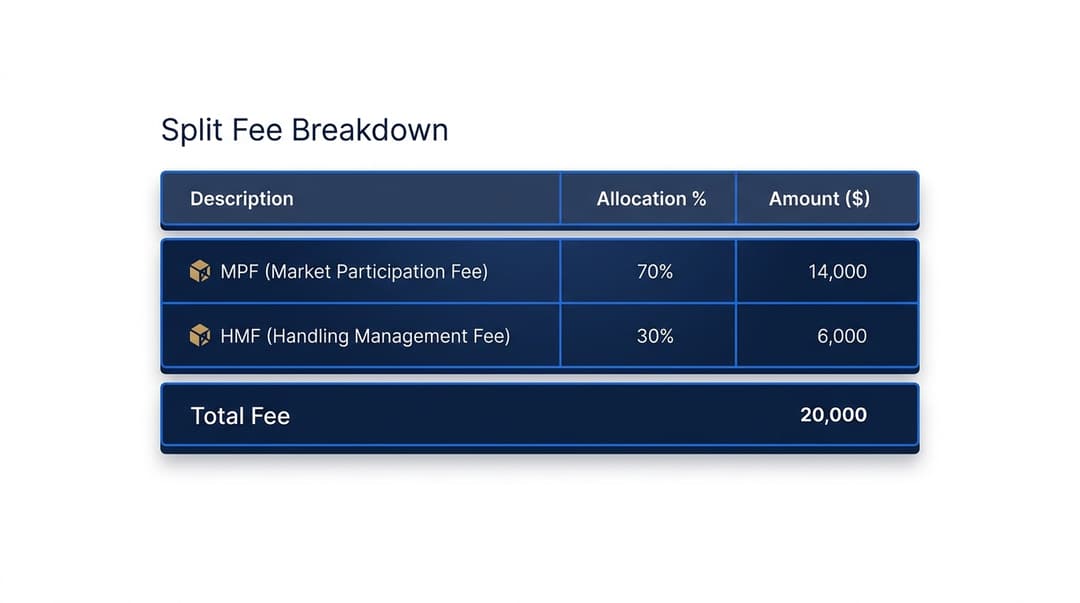
MPF and HMF fee refund mechanics
Pro-rata fee refund rules when IEEPA duty refunds.
Read more →Related questions
Find out what you’re actually owed.
Run the IEEPA refund calculator or take the 60-second qualification quiz. Estimate only — subject to CBP adjudication.