HTS Reclassification: How to Legally Lower Your Duty Rate in 2026
TL;DR
1. Why Classification Matters
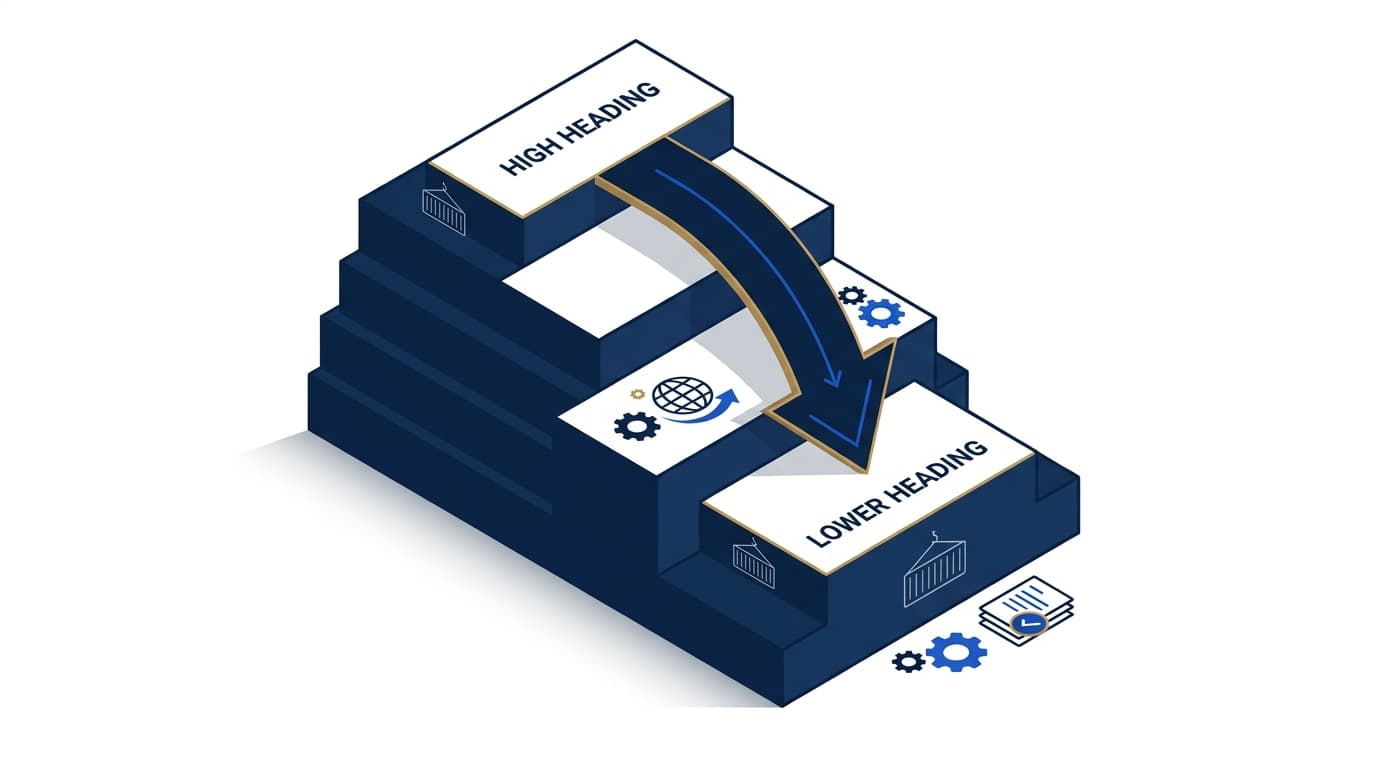
Every imported good is assigned a 10-digit HTSUS code. The first six digits align with the international Harmonized System; the last four are U.S.-specific. Duty rates attach to the 8-digit subheading, and the same product can fall under different subheadings depending on its physical characteristics, composition, use, and condition at the moment of importation.
Examples of classification-driven duty gaps:
| Product | Heading A | Rate A | Heading B | Rate B | Gap |
|---|---|---|---|---|---|
| Sneakers with textile upper | 6404.11 (>50% textile) | 20% | 6404.19 (rubber outsole priority) | 37.5% | 17.5% |
| Cargo van with windows | 8703 (passenger) | 2.5% | 8704 (cargo) | 25% | 22.5% |
| Frozen pizza | 1901.20 (dough mix) | 6.4% | 2106.90 (food prep) | 6.4% + AD/CVD possible | variable |
| Fabric softener sheets | 3402.13 (surface active) | Free | 3824.99 (chemical prep) | 5% | 5% |
| Touchscreen tablet | 8471.30 (ADP) | Free | 8517.12 (cellular phone) | Free + Section 301 applies | variable |
A product incorrectly classified at the higher-rate heading is paying duty it does not owe. A product designed from the start to qualify for the lower-rate heading is practicing tariff engineering.
2. The Two Leading Cases
Converse v. United States (CIT 2019): Converse designed its Chuck Taylor sneakers with a thin rubber overlay on the toe and foxing, knowing that CBP classified sneakers with rubber outsoles at 37.5% (HTSUS 6404.19) and sneakers with textile-dominant uppers at 20% (HTSUS 6404.11). Converse structured the shoe so that by surface area, textile dominated the upper, bringing the product under 6404.11. CIT held the classification was correct and that Converse's intentional design to achieve the lower rate was lawful tariff engineering, not duty evasion.
Ford Motor Co. v. United States (Fed. Cir. 2019): Ford imported the Transit Connect van from Turkey configured with rear seats and windows, then removed the seats and windows in a U.S. bonded warehouse to create cargo vans for domestic sale. CBP reclassified the vehicles as cargo vans (25% duty under 8704) rather than passenger vehicles (2.5% duty under 8703). The Federal Circuit sided with CBP, holding that "condition at importation" is evaluated based on what the goods actually are at the moment of entry, and the post-entry removal was insufficient to recharacterize the vehicles.
The lesson: tariff engineering is legal when the product's physical or commercial character truly places it in the lower-rate heading at the moment of importation. Post-import manipulation does not count.
3. When to Investigate Reclassification
Triggers for a classification review:
- You have never formally reviewed your HTS codes. Many importers inherited codes from a broker or supplier years ago and never re-validated. Drift is common.
- A competitor pays a different rate on a similar product. Public import data (Panjiva, ImportGenius) can surface the discrepancy.
- The product underwent a design change. New materials, new components, or new uses can shift classification.
- Duty liability exceeds $500K/year. Below this, the review cost may exceed savings.
- A CBP ruling on a related product has issued. CBP's CROSS database publishes rulings; adjacent rulings can support your own reclassification.
- CBP issued a CF-28 or CF-29 on your current classification. Defend and/or reclassify.
4. The Reclassification Process
Step 1: Classification review. A licensed customs broker or attorney reviews product specs, bills of materials, use cases, and current HTS code. Output: a classification memo with supporting reasoning and citations.
Step 2: Test binding ruling application. File CBP Form 7553 or request via the CROSS ruling portal for a binding classification ruling under 19 CFR Part 177. Rulings take 30-90 days and are binding on CBP if facts match.
Step 3: Parallel entry filing. Once the ruling confirms the new classification, file subsequent entries under the new HTS code. Maintain documentation.
Step 4: Prior disclosure or reconciliation for past entries. If past entries were filed under the wrong code and duty was overpaid, file a Post-Summary Correction (within 300 days of entry) or a CF-19 protest (within 180 days of liquidation) to recover overpaid duty. For under-paid duty, file a prior disclosure under 19 USC 1592(c)(4) to mitigate penalty risk.
Step 5: Update systems. Broker instructions, ERP tariff codes, supplier PO templates, and compliance manuals all need the new HTS code.
Step 6: Annual re-validation. HTSUS updates annually (January 1) and mid-year. Product specifications change. Run an annual classification audit.
5. Tariff Engineering, Done Right
Tariff engineering is the pre-import design practice of configuring a product so it legitimately falls within a lower-duty HTS heading. Examples:
- Material composition. Shifting the dominant material percentage can move a product between chapters. Converse's textile-dominant upper is the classic.
- Finishing state. Products imported as "incomplete" or "unfinished" may fall under lower-rate parts headings, provided the assembly is non-trivial post-import.
- Component separation. Importing subassemblies separately and assembling domestically can reduce duty on the high-rate component.
- Packaging. Goods imported in retail-ready vs bulk packaging sometimes classify differently.
- Use designation. Machinery "designed for" a specific industrial use sometimes qualifies for duty-free heading treatment.
The legal line: the engineered product must actually be what the lower-rate heading describes, at the moment of importation. CBP audits tariff engineering programs. Documentation must show the product as imported matches the classification claimed.
6. How Reclassification Interacts with 2026 Refunds
For entries filed during the IEEPA window (April 2, 2025 - February 20, 2026), reclassification could potentially reduce the IEEPA duty base as well. However:
- IEEPA duty is coded on HTSUS 9903.01.xx regardless of the underlying Chapter 1-97 classification. Reclassification does not typically remove the IEEPA charge; the SCOTUS ruling does that.
- What reclassification can do is reduce the MFN base rate and potentially Section 301 exposure for past unliquidated entries (via PSC) and future entries.
- For past liquidated entries, CF-19 protest within 180 days is the recovery mechanism for misclassification.
See the AI Analyzer to cross-check your HTS codes against your actual product specs.
7. Common Reclassification Mistakes
- Broker defaulted to easiest code. Brokers sometimes use general headings (e.g., 3926.90 "other articles of plastic") when a more specific and lower-rate heading applies.
- Product changed, HTS code did not. Sourcing shifts (e.g., textile-to-synthetic blend change) often shift classification.
- Post-import manipulation. Ford Transit teaches: you cannot reclassify by disassembling after entry.
- Missing the binding ruling. Informal classification changes risk retroactive CBP challenge. Binding rulings shield you.
- Ignoring the GRIs. The General Rules of Interpretation govern HTSUS classification hierarchy. Skipping GRI analysis produces incorrect codes.
- Over-reliance on a competitor's HTS code. Public import data is useful but not determinative; competitors may themselves be misclassified.
Frequently Asked Questions
Q: Is tariff engineering legal? Yes. Converse and decades of CIT precedent confirm that designing a product to qualify for a lower-duty classification at the moment of importation is lawful.
Q: Can I recover overpaid duty from past misclassification? Yes, via PSC (within 300 days of entry) for unliquidated entries or CF-19 protest (within 180 days of liquidation) for liquidated entries. Older misclassification has limited recovery options.
Q: How long does a binding ruling take? Typically 30-90 days. Complex rulings (valuation, related-party) can take 6 months.
Q: Does reclassification affect Section 301 duty? Yes indirectly. Section 301 applies to specific HTS subheadings. Reclassifying out of the Section 301 list can eliminate Section 301 exposure, though CBP scrutinizes this carefully.
Q: Who files the binding ruling request? You can file yourself as the importer, or have a licensed customs broker or attorney file on your behalf. For compensation, only a broker may transact the filing under 19 USC 1641.
Check your classifications: Run your HTS codes through the AI Analyzer, estimate duty savings with the HTS Duty Rate Calculator, or book a classification audit.
Reviewed by Licensed Customs Broker Partner (pending name). Last updated April 22, 2026. Educational content only. Classification and entry filing are customs business executed by our partner licensed customs broker under 19 USC 1641.
Keep reading
tariff engineering primer
Quick answer on classification and origin strategy.
Read more →
first-sale legality basics
Companion valuation strategy worth pairing with reclass.
Read more →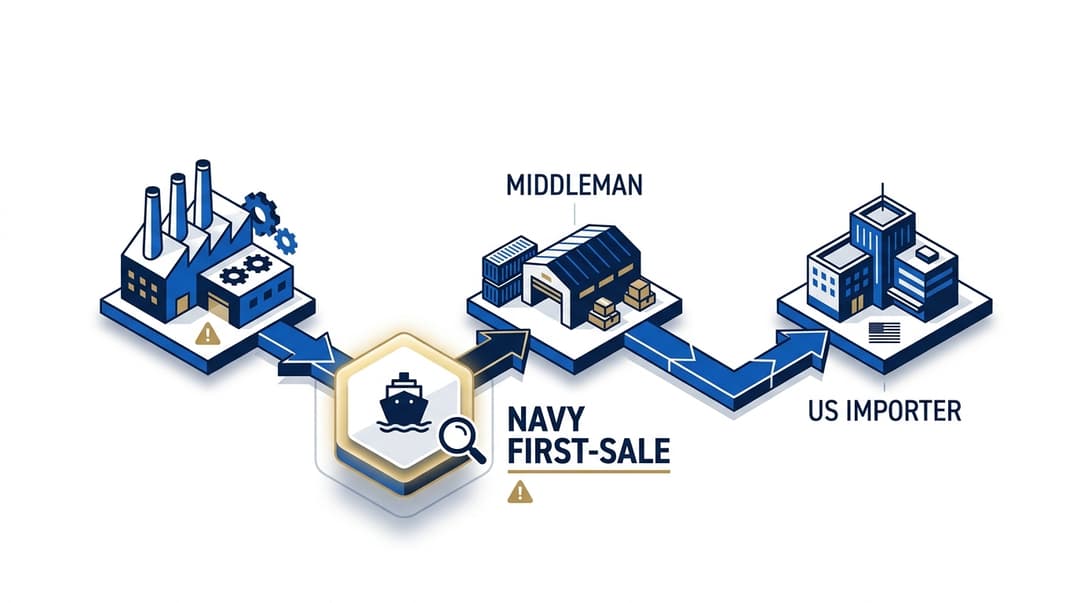
first-sale valuation playbook
Complete walkthrough of the valuation-side strategy.
Read more →
Section 232 exclusion request mechanics
Related metal-tariff path that complements reclass.
Read more →Frequently asked questions
Ready to recover?
Run the calculator or take the 60-second qualification quiz. Estimate only — subject to CBP adjudication.