Trump Tariff Refund: The Plain-English Guide for US Importers
TL;DR
1. What Was Actually Struck Down
The Supreme Court's opinion in Learning Resources was narrowly written and carefully scoped. It vacated only one specific tariff authority: ad valorem duties imposed under the International Emergency Economic Powers Act.
IEEPA, enacted in 1977, permits the President to "regulate... any... importation or exportation of... any property" during a declared national emergency. The question before the Court was whether "regulate" includes the power to impose new, revenue-raising duties. The majority held it does not. The reasoning rested on the text (IEEPA does not use words like "duty," "tariff," or "surcharge"), the structure (the Constitution vests the tariff power in Congress, which must delegate it with clear language), and historical practice (IEEPA had never been used this way in its almost 50-year history before 2025). The the Supreme Court IEEPA opinion explained covers the full holding, the dissent, and the remediation order in detail.
The practical effect: every dollar of duty coded under HTSUS Chapter 99 subheading 9903.01.xx on entry summaries filed between April 2, 2025 and February 20, 2026 is, in principle, refundable with interest under 19 U.S.C. § 1505(c). The universe of refundable duty is roughly $166 billion spread across about 330,000 importers of record.
2. What Was Not Struck Down
The ruling is narrow on purpose. Chief Justice Roberts's majority opinion went out of its way to preserve every other statutory tariff authority. The following duties are unaffected by Learning Resources and are not refundable under the SCOTUS decision:
| Authority | Statute | HTSUS Chapter 99 Range | Status |
|---|---|---|---|
| Section 301 (China Lists 1 to 4) | 19 USC 2411 | 9903.88.xx | Active, not refundable |
| Section 232 (steel/aluminum/auto) | 19 USC 1862 | 9903.81.xx | Active, not refundable |
| Section 201 (safeguards) | 19 USC 2251-2254 | 9903.91.xx | Active, not refundable |
| Section 122 (balance of payments) | 19 USC 2132 | 9903.80.xx | Active until July 24, 2026 sunset, not refundable |
| Antidumping / Countervailing | 19 USC 1673 et seq. | Not Chapter 99 | Active, not refundable |
| Section 338 | 19 USC 1338 | Not Chapter 99 | Active, not refundable |
If the line item on your entry summary is coded under any of these authorities, the SCOTUS ruling does not recover that duty. The refund pool is strictly the IEEPA bucket. Drawback under 19 U.S.C. § 1313 remains available for Section 301 and Section 232 duties on exported goods at 99 percent of duty paid, which is a separate and complementary recovery path.
Estimate only. Subject to CBP adjudication.
3. Who Qualifies for the Refund
The refund is keyed to the Importer of Record. This is the entity listed in Block 23 of CBP Form 7501 (Entry Summary) at the time the entry was filed. Qualification is at the EIN level, not the shipment level.
Three points matter for qualification:
The Importer of Record controls, full stop. If you paid a customs broker or a forwarder, they are not the importer of record. If you bought finished goods from a US distributor, the distributor may have been the importer of record, in which case they hold the refund right, not you. Verify by pulling the entry summary and reading Block 23.
Consumers do not qualify. No US consumer is an importer of record on any CBP Form 7501. The ongoing retail price ripple from the tariffs is not compensable. There is no consumer rebate program, no class-action fund, no "check in the mail." The consumer rebate answer page explains why in detail.
Foreign manufacturers do not qualify. The duty was paid by the US importer at entry. The foreign seller's pricing may have absorbed part of the cost, but legally the refund goes to whoever paid CBP. That is always the importer of record.
Use the the qualification quick-answer page for edge cases (freight forwarders as IOR of record, customs brokers on continuous bonds, related-party transactions, etc.).
4. The Two Filing Paths: CAPE and CF-19
CBP has implemented two filing lanes for IEEPA refunds. Both require affirmative action. There is no automatic refund.
CF-19 protest (19 C.F.R. Part 174). This is the traditional protest path. Filed under 19 U.S.C. § 1514 within 180 days of the date of liquidation of the entry. Available on any entry still inside its 180-day protest window. The filing fee and effort are modest. The CF-19 route should be used on any entry still in-window because it preserves statutory appeal rights that the CAPE path may not.
CAPE portal. The new portal, opened by CBP on April 20, 2026 in response to the Court's remediation order, handles liquidated entries that are past their 180-day CF-19 window. Without CAPE, those entries would have no refund path because the normal protest clock ran out. CAPE Phase 1 closes July 24, 2026. CAPE Phase 2 closes October 16, 2026. Missing both windows means the refund is forfeit.
The CAPE portal filing walkthrough covers the filing flow, document requirements, and timing in detail.
Practical routing rule: If your entry liquidated inside the last 180 days, file a CF-19 protest first because it preserves rights. If the entry is older, the only path is CAPE. Do both in parallel if you have entries in both categories.
5. Why This Is Not DIY
IEEPA refund filing is customs business. Under 19 U.S.C. § 1641, anyone transacting customs business on behalf of another must be a licensed customs broker. The only exception is a company filing on its own account. Even then, the CAPE portal requires ACE access, a continuous bond, broker-level familiarity with HTSUS Chapter 99 coding, and the ability to read and reconcile entry summaries line by line.
Tariff Refund Credits operates as a lead-generation service connecting US importers with licensed customs broker partners operating under 19 CFR 111. We do not file CAPE claims or CF-19 protests ourselves. Our broker partner handles all customs business under 19 USC 1641 and 19 CFR 111. This arrangement is how the regulatory framework requires the work to be done.
Practical reasons DIY fails for most importers:
- Entry summaries routinely mix 9903.01.xx (IEEPA) with 9903.88.xx (Section 301) and 9903.80.xx (Section 122) lines. Separating them correctly is where most DIY filings go wrong.
- CAPE requires specific document formats, supporting entry documentation, and an ACE-compatible refund disbursement setup (typically ACH via CBP Form 1300).
- Mis-coded Chapter 99 lines on original entries can require Post-Summary Correction before a refund claim can be processed. PSC is broker work.
- Partial refunds or CBP denials trigger administrative appeal rights that are preserved only if the original claim was filed correctly.
For small importers with a handful of entries and no broker relationship, we still recommend engaging a broker partner through us or directly. The filing complexity does not scale down much, and the downside of a rejected claim is usually loss of the refund itself.
6. The 180-Day CF-19 Deadline
The protest deadline under 19 U.S.C. § 1514(c)(3) is 180 days from the date of liquidation. "Liquidation" is a specific customs term (the final computation of duties on an entry, usually 314 days after the filing date unless extended). The clock starts ticking at liquidation, not at filing.
Miss the CF-19 window, and the traditional appeal path is closed. CAPE is the only remaining route, and CAPE Phase 2 closes October 16, 2026.
For importers who filed entries in mid-to-late 2025, liquidation dates are scattered across late 2025 and mid-2026. Every entry has its own clock. Pull the liquidation dates from ACE first, tag the ones still inside 180 days for CF-19, and route the rest to CAPE. Do not wait.
Estimate only. Subject to CBP adjudication.
7. Realistic Timeline Expectations
Timeline is heavily dependent on filing path, claim complexity, and CBP queue load. Rough expectations based on CBP's stated remediation goals and current throughput:
CAPE portal filings. Target processing is 60 to 90 days from complete submission to disbursement for clean single-authority claims on unambiguous entries. Complex multi-authority entries or ones requiring Post-Summary Correction can run 120 to 180 days. The Court's remediation order capped all processing at 270 days from February 20, 2026 (which puts the outer bound in mid-November 2026).
CF-19 protests. Historically 120 to 360 days to full disbursement for a standard protest. Complex protests or those requiring CIT appeal can run much longer. The CF-19 path is slower on average than CAPE for refund disbursement, but it preserves more appeal rights.
Interest accrual. Refunds include interest under 19 U.S.C. § 1505(c) from the date of deposit. The interest rate is the IRS underpayment rate, which at the time of writing is roughly 8 percent annualized. On a $500,000 refund, a 180-day delay in processing is not catastrophic because interest is running.
Plan for a six-month to one-year window from filing to cash in hand. Budget cash flow accordingly. Do not structure 2026 operations around imminent receipt of the refund.
8. Three Categories That Auto-Disqualify
Some entry profiles cannot be handled through the standard refund path and must be routed to a customs law firm, not a broker. Three red flags:
Transshipment cases. If your country-of-origin analysis is under CBP review, under fraud investigation, or implicates any diversion or transshipment concern (commonly seen with shipments from Vietnam, Malaysia, Thailand, or Mexico routed to avoid China-origin 301 duties), the entry is not eligible for a clean refund and may trigger penalties. Refer to customs counsel.
UFLPA-detained shipments. Goods held under a Uyghur Forced Labor Prevention Act Withhold Release Order are not ready for a refund analysis. The entry is not finalized until the WRO is cleared, and the duty exposure is uncertain. Counsel handles both the WRO response and the downstream refund question.
AD/CVD entries. Antidumping and countervailing duty entries have their own statutory scheme (19 U.S.C. § 1673 et seq.) and their own administrative review process at Commerce. Refund analysis requires coordination between Commerce (AD/CVD rate determination) and CBP (liquidation and refund). This is not broker-level work. Refer to a customs law firm.
These three categories are not "hard" or "complicated," they are out-of-scope for a standard IEEPA refund claim. Identifying them and routing them correctly is the first screen in any exposure analysis.
9. Beware the Consumer Rebate Scam
Since February 2026, a wave of consumer-facing "tariff refund" and "tariff rebate" marketing has surfaced on social media, SMS, and direct mail. These claims range from "the government owes you $X for paying higher prices" to "click here to file for your tariff rebate" directed at US consumers.
They are scams. A few facts to pin down:
- The Learning Resources refund is strictly for importers of record on CBP Form 7501. Consumers are not parties to any customs entry.
- No federal program pays consumers for retail price increases tied to tariffs. No such authority exists.
- CBP does not use SMS, direct mail, or unsolicited outbound calls to notify anyone of eligibility for a refund.
- Any request for personal financial information, SSN, or banking details tied to a "tariff rebate" is a phishing or identity-theft attempt.
The downstream consumer-rebate rules has more detail on how to spot these scams and where to report them.
10. Action Steps
- Pull your ACE entry summaries for April 2, 2025 through February 20, 2026. Export to CSV.
- Run them through the AI Analyzer to auto-separate IEEPA (9903.01.xx) lines from Section 301, 232, and 122 lines.
- Model the refund with the IEEPA refund calculator to get a credit estimate. Estimate only, subject to CBP adjudication.
- Tag entries still inside the 180-day CF-19 window and route those to a protest filing first.
- Tag liquidated entries past 180 days and route to the CAPE portal (Phase 1 closes July 24, 2026; Phase 2 closes October 16, 2026).
- Separate out transshipment, UFLPA, and AD/CVD entries and route those to a customs law firm rather than a broker.
- Verify you are ACH-enrolled for CBP refund disbursement (Form 1300). Paper checks slow everything down.
- Engage a licensed customs broker partner through us or directly. Customs business under 19 USC 1641 requires a licensed broker.
Tariff Refund Credits is a lead-generation service connecting US importers with licensed customs broker partners operating under 19 CFR 111. We do not file customs entries, protests, or CAPE claims. Our broker partner handles all customs business under 19 USC 1641.
Frequently Asked Questions
Q: Am I owed a Trump tariff refund if I am a consumer who paid higher prices? No. Only the Importer of Record on CBP Form 7501 holds the refund right. Consumers have no legal claim. See the consumer rebate answer for detail.
Q: Are Section 301 China tariffs refundable under the SCOTUS ruling? No. Section 301 has independent statutory authority under 19 U.S.C. § 2411 and was not touched by Learning Resources. Drawback under 19 U.S.C. § 1313 is available for Section 301 duties on exported goods, at 99 percent of duty paid.
Q: Can I file my own CAPE claim without a broker? You can if you are filing on your own account and have ACE access plus a continuous bond. Most importers do not have the in-house capacity and engage a licensed customs broker partner under 19 CFR 111.
Q: What if I miss the CF-19 180-day deadline? CAPE is the remaining path. CAPE Phase 1 closes July 24, 2026 and Phase 2 closes October 16, 2026. Miss both and the refund is forfeit.
Q: How is the refund amount calculated? It is the IEEPA duty paid on refundable entries plus interest under 19 U.S.C. § 1505(c) from the date of deposit. Estimate only, subject to CBP adjudication. Use the IEEPA refund calculator for a rough number based on your entry data.
Q: What if my goods were detained under UFLPA? UFLPA-detained shipments auto-disqualify from standard refund processing. Refer to a customs law firm to handle both the WRO response and the downstream duty question.
Next step: Estimate your credit with the IEEPA refund calculator, confirm qualifying-importer checklist, or run your entries through the AI Analyzer.
Reviewed by Licensed Customs Broker Partner (pending name). Last updated April 22, 2026. Educational content only. Refund filings are customs business executed by our partner licensed customs broker under 19 USC 1641.
Keep reading
Trump-tariff refund qualification rules
Eligibility framework for the 2025 IEEPA refund.
Read more →
the SCOTUS ruling that vacated the tariffs
Court opinion that triggered the refund window.
Read more →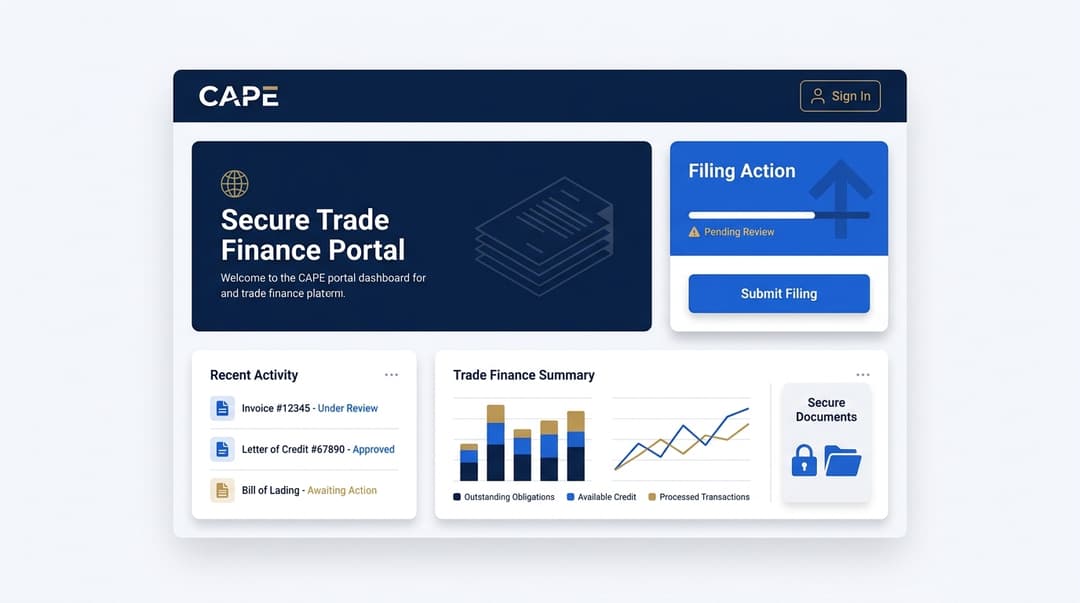
CAPE filing process after the ruling
Portal walkthrough for post-ruling refund recovery.
Read more →
rebate-distribution rules for end consumers
How the remedial order treats downstream rebates.
Read more →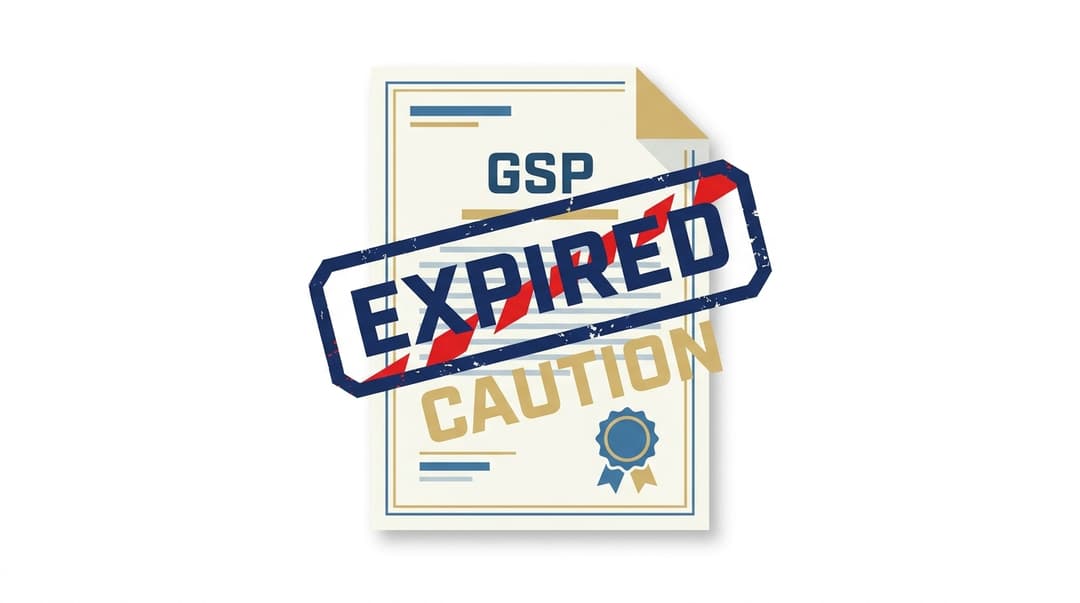
GSP lapse context for 2025 importers
Generalized System of Preferences expiration and what changed.
Read more →Frequently asked questions
Ready to recover?
Run the calculator or take the 60-second qualification quiz. Estimate only — subject to CBP adjudication.