SCOTUS Tariff Refund Ruling: What Learning Resources v. Trump Means for Importers
TL;DR
1. The Case in One Paragraph
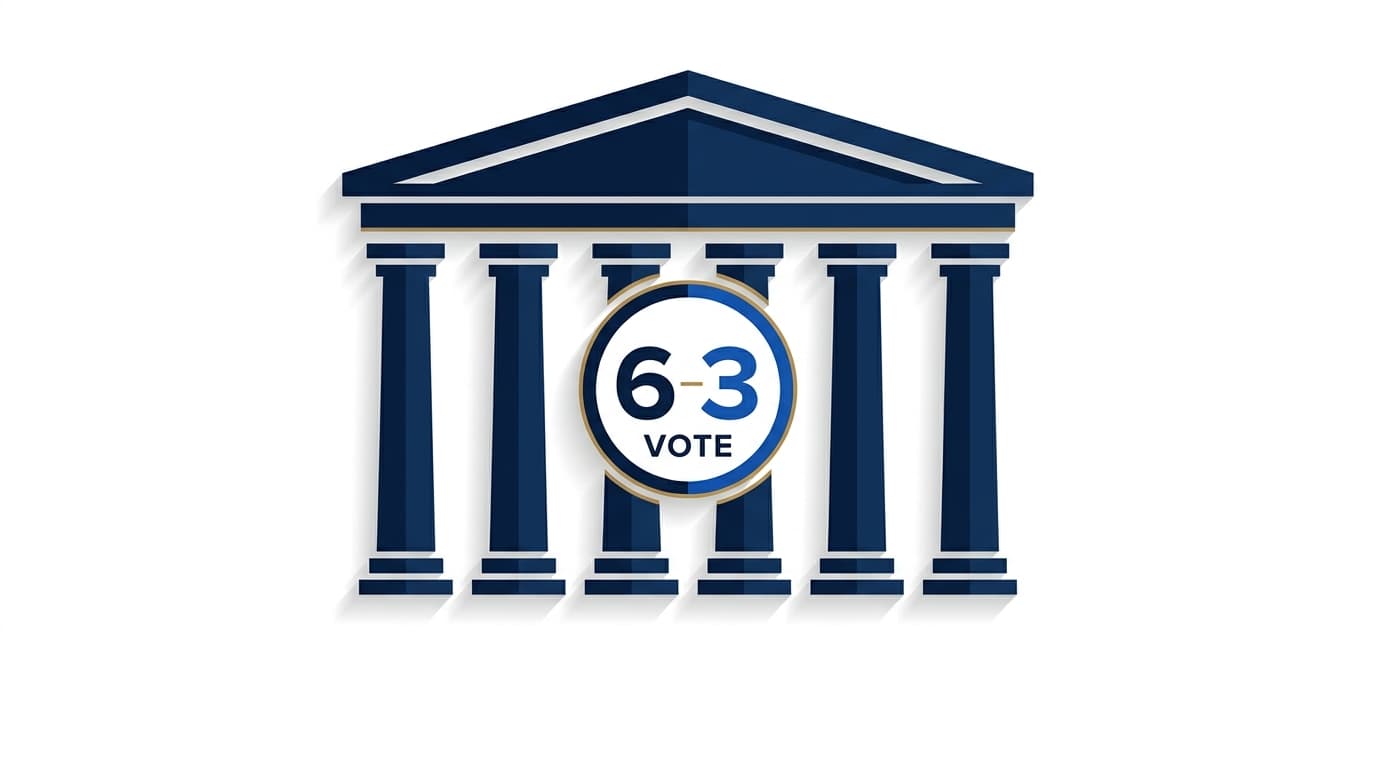
Learning Resources, Inc., a Chicago-based educational toy importer, filed suit in the Court of International Trade in May 2025 after paying $14.2 million in IEEPA duties on Chinese-origin STEM products. CIT ruled in Learning Resources' favor in August 2025. The Federal Circuit affirmed in November 2025. The Supreme Court granted cert and heard argument January 13, 2026. The 6-3 decision issued February 20, 2026.
2. The Holding
The majority opinion, authored by Chief Justice Roberts and joined by Justices Thomas, Alito, Gorsuch, Kavanaugh, and Barrett, held that IEEPA does not authorize ad valorem tariffs. Key reasoning:
The text. IEEPA permits the President to "regulate... any... importation or exportation of... any property in which any foreign country or a national thereof has any interest." (50 U.S.C. § 1702(a)(1)(B)). The majority read "regulate" as governing the conditions of importation (licensing, blocking, seizing) but not imposing revenue-raising duties.
The structure. The Constitution vests the tariff power in Congress (Art. I, § 8, cl. 1 and 3). Delegations of that power to the executive must be clear and circumscribed. IEEPA's text, unlike Sections 232 and 301, contains no explicit tariff-setting authority.
Historical practice. IEEPA, enacted in 1977 and its predecessor Trading with the Enemy Act, had never been used to impose broad ad valorem tariffs until 2025. The majority found this "near-half-century gap" probative of the statute's proper scope.
The major questions doctrine. The Court applied the major questions doctrine, requiring "clear congressional authorization" for agency action of vast economic and political significance. IEEPA's text did not meet that standard.
3. The Dissent
Justices Sotomayor, Kagan, and Jackson dissented. Justice Sotomayor wrote that IEEPA's broad "regulate" language, combined with the President's foreign affairs authority, should accommodate tariff-setting during a declared national emergency. The dissent also criticized the majority for applying the major questions doctrine to a national security statute and warned that the ruling could tie the executive's hands in future emergencies.
4. What the Ruling Did Not Touch
The decision is narrow. It does not affect:
| Statute | Authority | Status Post-Ruling |
|---|---|---|
| Section 232 | 19 USC 1862 | Active; steel/aluminum/auto tariffs unchanged |
| Section 301 | 19 USC 2411 | Active; China List 1-4 tariffs unchanged |
| Section 201 | 19 USC 2251-2254 | Active; safeguard tariffs unchanged |
| Section 122 | 19 USC 2132 | Active; 10% surcharge expires July 24, 2026 by statutory sunset |
| Antidumping / Countervailing | 19 USC 1673 et seq. | Unaffected |
| Section 338 | 19 USC 1338 | Unaffected |
If the duty on your entry was coded under a non-IEEPA HTSUS Chapter 99 subheading (for example 9903.88 for Section 301, or 9903.80 for Section 232), the ruling does not touch it. Only 9903.01.xx (IEEPA-specific) codes refund.
5. The Remediation Order
The Court's remedial order gave CBP 270 days to implement refunds. CBP's response was the CAPE portal, opened April 20, 2026. Key features of the remediation:
- Refunds include full interest under 19 U.S.C. § 1505(c)
- Filing path is CAPE for liquidated entries outside the 180-day CF-19 window
- CF-19 protest remains available for any entry inside its 180-day window
- Post-Summary Correction available for unliquidated entries
- No automatic refunds; every claim must be affirmatively filed
- Phase 1 closes July 24, 2026; Phase 2 closes October 16, 2026
6. Downstream Legal and Political Effects
The ruling has several second-order effects relevant to importers:
The Cassidy bill. Senator Cassidy introduced legislation in March 2026 to statutorily authorize ad valorem IEEPA tariffs, retroactive to April 2025. Passage is uncertain. If enacted, it could reduce or eliminate refunds on entries for which CBP has not yet disbursed. Importers should not delay CAPE filings in hopes of better options.
Section 122 sunset. The 10% balance-of-payments surcharge imposed in late 2025 under Section 122 expires by statute July 24, 2026. Unlike IEEPA, Section 122 is explicitly authorized under 19 U.S.C. § 2132 and was not affected by the ruling. See the Section 122 sunset guide.
Section 301 escalation. Following the ruling, the Executive Branch moved to shift revenue capture to Section 301 by expanding List 4 coverage. Those tariffs are not refundable under the SCOTUS decision, though drawback remains available.
Litigation pipeline. The Court of International Trade has received thousands of parallel actions challenging various aspects of the refund remediation. Most will be stayed or consolidated as CAPE processes claims administratively.
Congressional hearings. House Ways and Means and Senate Finance have scheduled hearings on customs reform. Likely outcomes include clarifying IEEPA's scope and tightening Section 232/301 procedural guardrails.
7. What Importers Should Do Now
- Identify your IEEPA exposure. Pull ACE entry summaries for April 2, 2025 through February 20, 2026. Filter for HTSUS 9903.01.xx lines.
- File CF-19 on any entry still inside the 180-day window. Don't wait for CAPE if you can protect the statutory protest right.
- Register for ACH refund disbursement (CBP Form 1300) if not already enrolled.
- Engage a licensed customs broker partner for CAPE and CF-19 filings.
- Run a parallel drawback analysis. Section 301 and Section 232 duties were not touched by the ruling; drawback recovers 99% of those on exported goods.
- Don't assume refunds arrive automatically. They don't. CBP requires every claim to be filed.
Use the AI Analyzer to auto-separate IEEPA from other duties on your entries.
Frequently Asked Questions
Q: Does the ruling refund Section 301 China tariffs? No. Section 301 has independent statutory authority under 19 USC 2411 and is not affected.
Q: What happens if Congress retroactively authorizes IEEPA tariffs? The Cassidy bill, if passed, could affect pending refunds. Already-disbursed refunds are likely protected under contract and due-process principles, but this is legally uncertain. File early.
Q: Are Section 122 10% surcharges refundable? No. Section 122 has its own statutory basis and is unaffected. Section 122 expires by its own sunset on July 24, 2026.
Q: When does CBP have to finish processing refunds? The Court's remedial order gave CBP 270 days from February 20, 2026. Phase 1 closes July 24; Phase 2 closes October 16.
Q: Can I still file a Court of International Trade case if CAPE rejects my claim? Yes, under 28 U.S.C. § 1581 the CIT retains jurisdiction over denied refund claims. Economical only for large claims given legal cost.
Next step: Use the IEEPA Refund Calculator, check post-ruling eligibility framework, or book a scoping call with our licensed customs broker partner.
Reviewed by Licensed Customs Broker Partner (pending name). Last updated April 22, 2026. Educational content only. Refund filings are customs business executed by our partner licensed customs broker under 19 USC 1641.
Keep reading
post-ruling refund eligibility checklist
Who qualifies in the wake of the SCOTUS opinion.
Read more →
consumer rebate provisions in the remedial order
Whether end consumers see any of the refund.
Read more →
post-ruling IEEPA refund walkthrough
Comprehensive guide to filing after the ruling.
Read more →
Trump-era tariff refund context
Broader political and legal landscape.
Read more →Frequently asked questions
Ready to recover?
Run the calculator or take the 60-second qualification quiz. Estimate only — subject to CBP adjudication.